
Mies’s Ghost

About the piece
Mies's Ghost (2016) by Berend Strik references the legacy of Ludwig Mies van der Rohe (1886–1969) — the pioneering modernist architect whose "less is more" principle transformed 20th-century architecture and design.
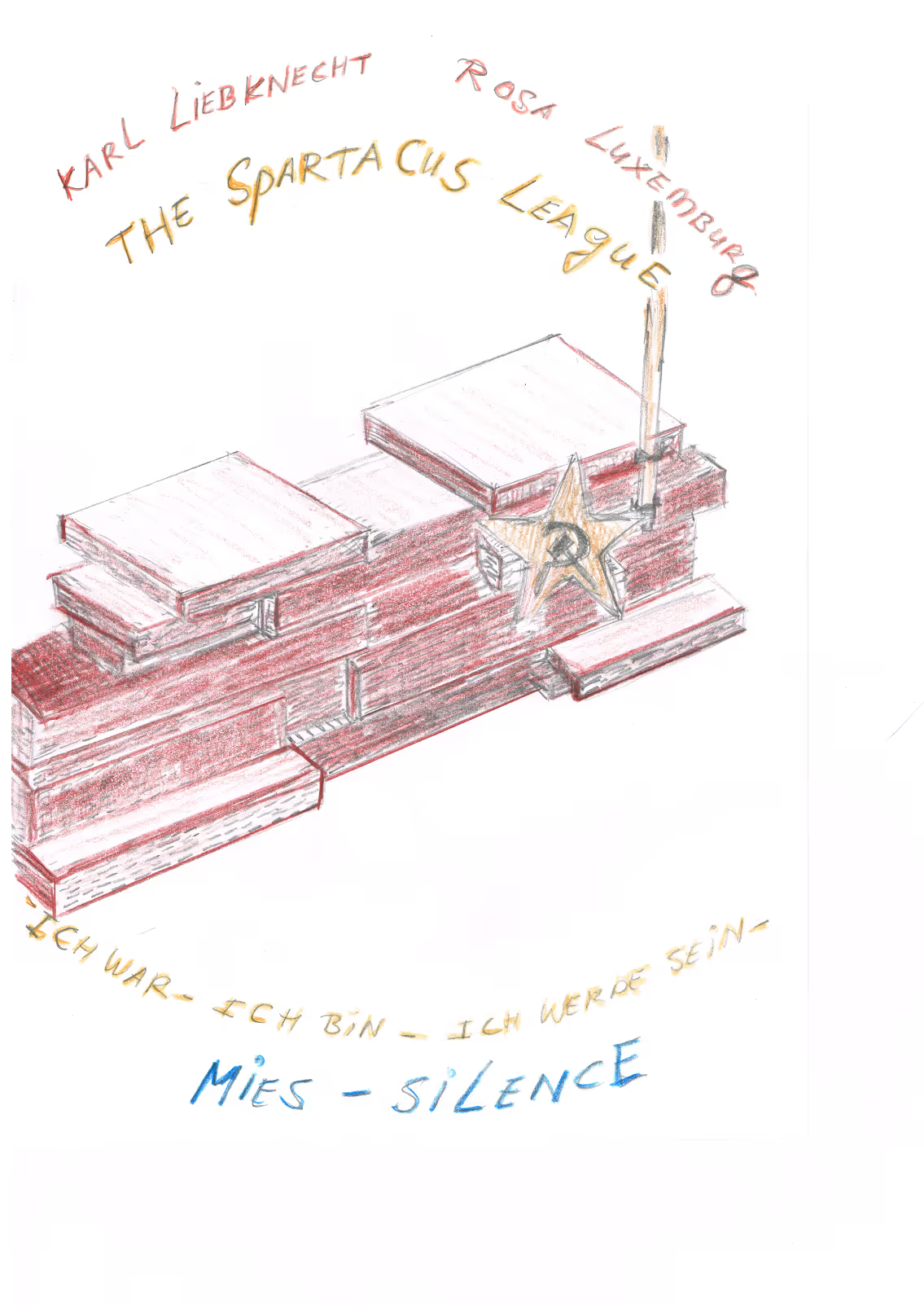
Strik describes the work: "A colored pencil drawing of a monumental constructivist-style building with a communist star and classical columns, suggesting the ghost of modernist utopianism — the dream that architecture could create a better society, and the disillusionment when it didn't."
Mies van der Rohe designed some of the most iconic buildings of the 20th century, including the Barcelona Pavilion (1929) and the Seagram Building in New York (1958). His influence on architecture continues to this day. But his association with the Bauhaus and with communist Germany also makes him a figure haunted by the darker aspects of modernist idealism.
Strik's "ghost" is both literal (the building seems to be haunted by the ambitions of its architect) and metaphorical (we are haunted by the modernist dream of architecture as social transformation). The communist star adds a note of irony — the star of a failed ideology appearing in the classical columns of bourgeois architecture.
Sources: Galerie Fons Welters